Brainwave Entrainment
Using Sound to Support Focus, Sleep, and Calm
In my work as a therapist, I am always looking for practical, accessible tools that clients can use outside of sessions to support their mental health. One area I’ve developed an interest in—and regularly use myself—is brainwave entrainment through sound. In this post I want to introduce you to two of the most common and easily accessible approaches; isochronic tones and binaural beats. While they may sound a bit technical, they are simple tools that can help regulate your nervous system, improve focus, and support better sleep.
What Is Brainwave Entrainment?
Your brain naturally produces electrical patterns—often referred to as brainwaves—that shift depending on your state. So, to entrain your brainwaves means to synchronize or make them flow more easily—rhythmically—to aid in everyday activities or regulate the needs of the body.
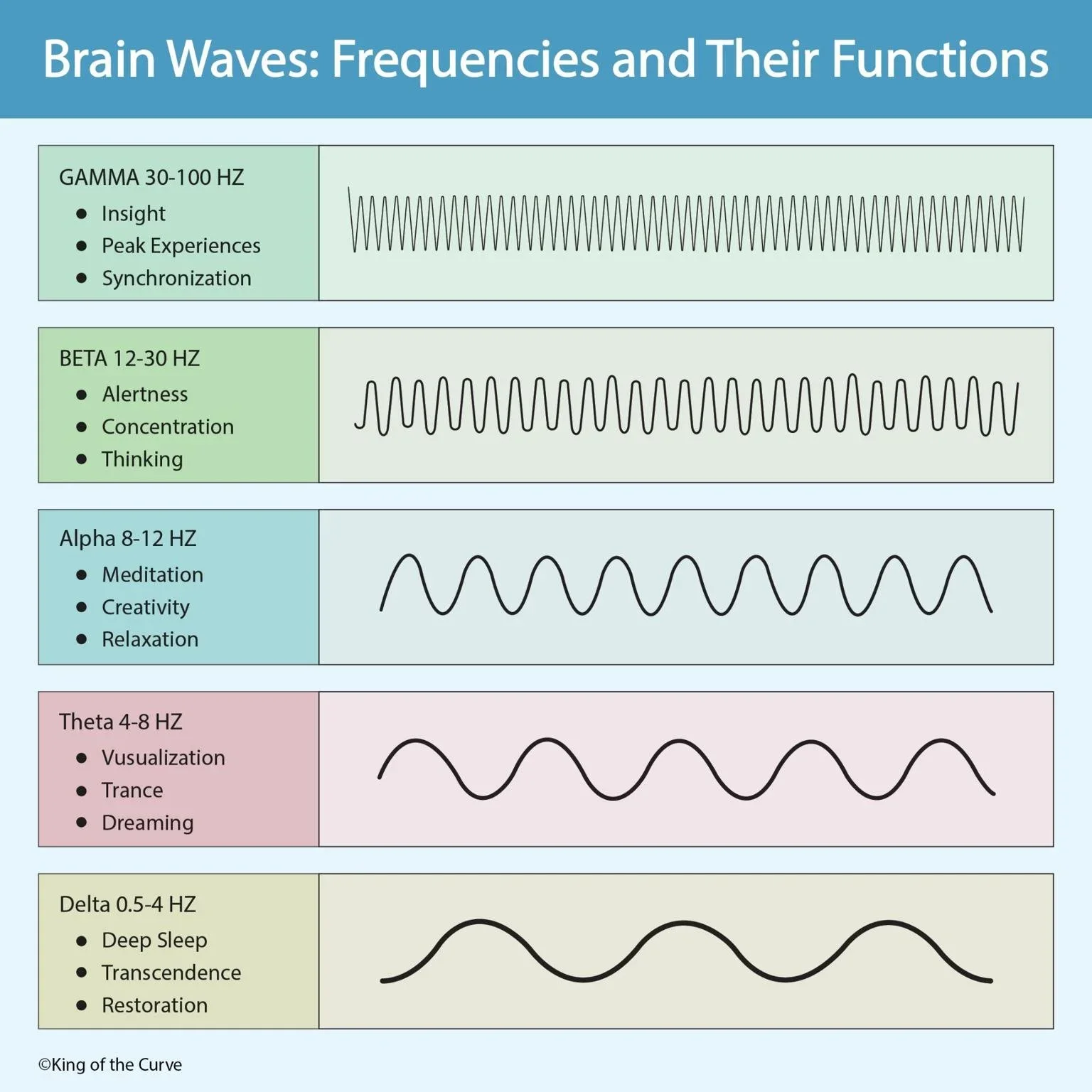
Brain waves are patterns of electrical activity occurring in the brain. They are categorized based on their frequency (measured in Hertz, Hz), which represents the number of cycles per second. Each type of brain wave is linked to specific states of consciousness, alertness, and behavior.
Brainwave entrainment uses sound to gently guide your brain into one of these states.
Isochronic Tones: clear, rhythmic pulses are single tones that turn on and off in a steady, rhythmic pattern—like a consistent pulse. This distinct repetition makes them one of the most direct forms of brainwave entrainment. Best for: Focus and productivity - Reducing mental clutter - Creating structure for ADHD or attention difficulties - Grounding during anxious or restless states
Why clients often like them:
No headphones required
Strong, noticeable effect
Easy to use during work or relaxation
Binaural Beats: subtle, immersive sound that work a bit differently. Two slightly different tones are played—one in each ear—and your brain perceives a third “beat” based on the difference between them. This requires headphones to work most effectively. Best for: Anxiety reduction- Sleep support - Meditation and mindfulness practices - Emotional regulation and unwinding after stress
Why clients often like them:
Gentle and immersive
Feels more like ambient sound or music
Easily paired with meditation or sleep routines
It is important to be clear, the science is still developing, effects are not guaranteed and some benefits may come from indirect factors— like reduced distraction or simply taking time to pause.
Who Might Benefit Most?
What I appreciate most about these tools is that they do not rely on willpower. If you have ever felt frustrated trying to “just relax” or “clear your mind,” brainwave entrainment offers a different pathway—one that works with your nervous system rather than against it. These tools resonate most with people who feel like their brain has trouble shifting gears.
That might look like:
Difficulty turning off thoughts at night
Feeling “wired but tired”
Trouble focusing or staying on task
A general sense of being mentally “on” all the time
As with any tool, individual responses vary. Some people notice immediate benefits, while others need to experiment with timing, frequency, and duration
Tips for getting started…
If you’re curious about how to integrate these tools into your life here are a few examples that my clients, friends, and I myself have found useful. And if it doesn’t? That’s useful information to keep what works.
Start with 10–20 minutes
Choose one goal (focus, relaxation, or sleep)
Use headphones for binaural beats
Notice how your body responds rather than forcing an outcome
Brainwave entrainment sits in an interesting space—part neuroscience, part lived experience. Brainwave management through sound is a simple, low-risk way to support your mental health in everyday life. Whether you’re trying to focus, unwind, or fall asleep more easily, experimenting with isochronic tones and binaural beats can be a meaningful addition to your routine.
So rather than thinking of this as a “fix,” it’s more useful to see it as one supportive option in a larger toolkit. Have fun!
Isochronic Tones
https://youtu.be/a4tNJTZHzPg?si=INwezBksqLKsULo8
https://youtu.be/QM1VLD16tDU?si=oF_5gfsILuEuSork
https://youtu.be/FtukH_bCDHg?si=mCAljxywhML_upIM
Binaural Beats
https://youtu.be/FIMdEPd98xs?si=NS2P53nuVkvqszBM
https://youtu.be/xsfyb1pStdw?si=AKqIBOYdcCFYPoqF
https://youtu.be/2AKewgViF9s?si=IlNAbCJWYKlzclu8 (pure 2.0 delta waves)